Most nonprofits believe they know their supporters, but even if you have everyone’s names in the CRM, you don’t really know who has the capacity to fund major initiatives. This has little to do with donor intent and far more to do with missing context. When records stop at basic contact details and past gifts, major gift prospects blend in with everyone else.
Incomplete donor databases flatten people into numbers. Career history, business ownership, real estate ties, board roles, and philanthropic patterns outside your organization don’t show up. Without this detail, donor intelligence remains shallow.
What’s the fix? Data enrichment. It adds layers of verified external information and turns raw records into usable profiles. This way, quiet supporters with the means to give at a higher level finally come into view. Below, we explain how data enrichment works and how nonprofits use it to identify major gift prospects already inside their files.
What is Donor Intelligence?
Donor intelligence explains who your supporters are beyond what appears in a giving report. It brings together several strands of information to answer one fundamental question. Who has both the ability and the inclination to make a larger commitment?
At its core, donor intelligence evaluates wealth capacity. This shows if a person can give at a higher level based on assets, business ties, and public records found through wealth screening.
It also looks at philanthropic history since past support for charities and foundations shows habits that matter more than a single gift to your organization. Cause affinity adds another layer. People give where their values align, even if their first gift to you was small.
This mix turns nonprofit prospect research into a focused exercise to help find major donors hiding in plain sight.
The ABC Framework: Ability, Belief, Ask
The ABC framework helps you spot major gift prospects easily. It organizes information into three lenses that work together to support your nonprofit fundraising strategy.
Ability (Capacity Screening)
Ability comes first because donor capacity sets real boundaries. Capacity screening looks at wealth indicators such as real estate holdings, stock ownership, private company ties, and executive roles. In 2025, corporate donations saw the highest uptick (9.1%), which shows how important these factors are to consider in capacity screening.
Income signals add more context, especially when paired with employment data. Wealth screening platforms pull this information from public and proprietary sources. Verified contact records are important at this stage because inaccurate profiles distort donor capacity estimates and ranking.
There are three major wealth indicators that determine ability. Let’s look at them individually.
Real Estate Holdings
Real estate provides a verifiable signal of donor capacity. Some insights to collect are:
- Primary residence value as a baseline indicator of stability
- Additional investment properties showing long-term wealth accumulation
- Total property portfolio value
- Public record data confirming ownership and property history
Net Worth
Net worth offers a comprehensive picture of a supporter’s financial position. Key factors include:
- Total assets
- Liquid assets
- Illiquid assets
- Estate value estimations to identify ultra-high-net-worth prospects ($1M+)
Investment Activity
Investment behavior shows that someone has liquid wealth and is ready to make major gifts. Look for the following signs of investment activity:
- Active management and investment sophistication
- Business ownership or equity stakes
- Liquidity events like asset sales
- Alternative investments (venture capital, private funds, etc)
- Stock holdings
If your nonprofit attracts a lot of attention from younger donors, look for signs of impact investing, since 80% of this group is interested in alternative investments.
Belief (Affinity and Engagement)
Belief focuses on affinity and demonstrated interest. Past philanthropic history shows patterns that point toward future support. For example, if donor A has previously donated to wildlife preservation campaigns, it’s likely they’ll do the same in the future.
In addition to giving history, psychographic data, such as values, lifestyle interests, media consumption, and issue awareness, helps identify donors who align deeply with your mission, even before their giving record fully reflects that connection.
Affinity matching depends on connecting these signals across multiple organizations. While screening platforms can help in this step, outreach still depends on valid email addresses and working phone numbers.
Ask (Data-Driven Amount)
How much can you potentially expect from the individual you’ve screened? Giving capacity assessment places that number in context alongside age, career stage, and recent life changes. You can then use this information to have the right conversation with the right prospects at the right time.
How Data Enrichment Reveals Hidden Major Donors
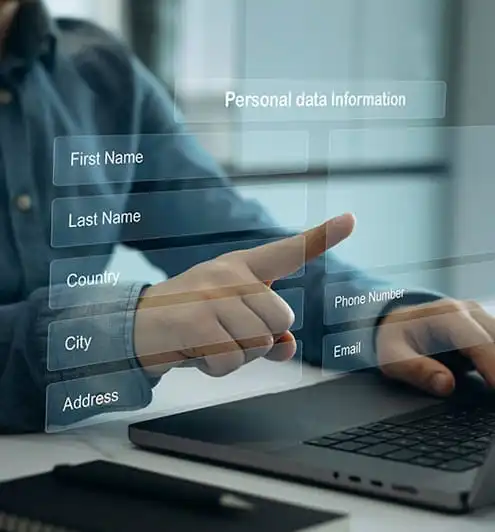
Many nonprofit databases contain partial information that keeps potential major donors out of sight. Missing email addresses, outdated phone numbers, incomplete employment data,missing key demographics, and limited giving context prevent teams from identifying high-capacity supporters.
Without this information, you cannot reach donors or corporate matching gift programs. You also have no idea about their total giving capacity. Here’s how data enrichment through The Data Group solves these problems.
Email Append
The Data Group locates missing email addresses and verifies them for deliverability. Our system accesses over 1 billion verified opt-in consumer emails with a deliverability rate of 99.5%.
Pricing begins at just $0.02 per record, which makes it cost-effective for nonprofits to complete donor databases. For example, a nonprofit with 10,000 incomplete records could recover thousands of missing email addresses and enjoy outreach that was previously impossible.
Phone Append
Phone append adds verified phone numbers to donor records to provide alternate content paths for calls, events, and stewardship. The Data Group maintains access to more than 700 million verified phone records. Multi-channel outreach increases engagement and helps identify major gift prospects that were previously unnoticed.
Donor Insight Demographics
Donor insight demographics, such as net worth, business ownership, and property holdings, combine multiple data points to show giving potential. Besides large donors, it also considers smaller, frequent, and sustainable contributors whose consistent support adds long-term value.
Patterns in past giving, combined with lifestyle and demographic signals, show who is likely to engage with your cause and at what level. With these insights, nonprofits can recognize steady supporters whose cumulative impact is significant.
Real-Time Verification and Multi-Source Validation
The Data Group continuously verifies and updates records. Over 200 million daily-updated records keep emails and phone numbers up-to-date. Multi-source validation further cross-references each piece of data to guarantee accuracy. Since The Data Group offers a free data test, you can experience its benefits before making a purchase decision.
Sign up for a free data match test today.
From Screening to Action: The Real-Time Advantage
Nonprofits have traditionally relied on annual or biannual screening to understand donor capacity. However, this only provides one overview of information and often misses important life changes that occur between updates.
Job changes, real estate transactions, stock sales, and new philanthropic activity can go unnoticed. By the time outreach occurs, records may already be outdated, which reduces the effectiveness of donor intelligence and nonprofit prospect reach.
Importance of Real-Time Monitoring
Real-time donor monitoring solves this problem by tracking changes as they happen. Automated alerts notify fundraising teams about:
- Real estate transactions indicating shifts in financial stability
- Stock or portfolio activity revealing available liquid assets
- Job or company changes, providing insight into income and capacity
- New philanthropic giving patterns that show cause alignment
- Public mentions in the news that suggest influence or prominence
The Data Group facilitates this type of continuous monitoring through its API and real-time enrichment tools. Employment updates, in particular, offer signals of giving potential, including promotions, income increases, or eligibility for corporate matching programs.
Continuous monitoring lets nonprofits act quickly. You can contact prospects at the optimal moment for engagement, which improves the chances of larger donations.
Mistakes to Avoid in Data Enrichment
Nonprofits often make avoidable errors that limit fundraising success. Here’s what they are and how to avoid them.
Mistake #1: Screening Without Enrichment
Many organizations perform nonprofit prospect screening but fail to enrich records first. There’s no point in identifying capacity if contact information is incomplete or outdated. The Data Group solves this by appending verified emails, phone numbers, and employment data before screening begins.
Mistake #2: Ignoring Employment Data
Don’t just focus on net worth estimates; employment data is just as important. Use employment enrichment to find income signals and positions that indicate major gift capacity.
Mistake #3: One-Time Screening
Screening once and assuming the data remains current is risky. Job changes, new investments, career ladder jumps, relocations, and new philanthropic activity occur constantly. You need continuous monitoring with real-time updates to make your data reflect current circumstances.
Mistake #4: Incomplete Contact Data
Major gift prospects often exist in the database but remain unreachable due to incorrect or missing emails and phone numbers. Enrich your contact information to target your nonprofit fundraising strategy at potentially large donors.
Mistake #5: Not Verifying Appended Data
Don’t rely on a single source for enrichment, as it may misidentify prospects. Multi-source validation confirms accuracy and helps teams prioritize the right donors.
Find Major Gift Prospects With Data Enrichment
Basic records and annual screenings are not enough to identify major gift prospects. What you need is data enrichment and real-time monitoring to keep track of opportunities.
Nonprofits that integrate The Data Group’s services into their donor intelligence can target the right prospects and maximize major gift potential. As you complete your donor database and monitor changes continuously, you’ll strengthen your fundraising outcomes in the long run. Learn more about The Data Group’s pricing to get started.
Frequently Asked Questions
What is donor intelligence?
Donor intelligence combines wealth capacity, philanthropic history, cause alignment, and contact data to reveal which supporters are most likely to make major gifts to nonprofit organizations.
Why is data enrichment important for nonprofits?
Data enrichment helps complete email, phone, contact, and employment information. Complete records facilitate nonprofits in identifying major gift prospects and making smarter decisions about where to focus fundraising efforts.
What are the key wealth indicators of major gift prospects?
Major gift capacity shows in real estate holdings, income level, past donations, total net worth, and investment activity. These indicators show liquidity and potential giving capacity, which helps nonprofits plan realistic gift requests accordingly.