When you see an unknown number on the screen, do you answer? Most people choose not to. In fact, Business Wire reports that a whopping 75% of Americans prefer not to answer calls from unfamiliar numbers.
Now flip that around. If you’re a nonprofit chasing down life-changing donations or a retail owner trying to confirm high-value orders, that number should scare you a little. Basically, a massive contact list doesn’t necessarily mean a massive audience. Poor quality data is, in fact, costly noise in disguise.
The Caller API, also known as the Phone Lookup API, fixes that by providing context for each contact in your database. It instantly vets a phone number as soon as it enters your ecosystem, ensuring your team spends its energy on real human beings. Below, we share what it is and how it works to complement your business efforts.
What Is a Caller API?
A Caller API is a software tool that allows your business platform to automatically retrieve carrier and identity data associated with a specific phone number.
When a user enters their phone number into your website, the API functions as a direct query link to authoritative telecommunications databases. It requests information tied to that specific number and fetches the available data points. Following this, it feeds them back into your system in real time.
Essentially, it’s a verification tool. You don’t need to manually guess whether a phone number is a mobile line, a landline, or a disposable VoIP number because the API automates the retrieval of that information at the point of entry. That way, you get to verify the user data without delaying the user experience.
How Phone Lookup APIs Work
Although the entire process happens in the blink of an eye, behind the scenes, a Phone Lookup API follows a strict, step-by-step workflow to convert a raw phone number into actionable data.
Here’s exactly what happens from the moment a user types in their digits to the moment your system gets the answers it needs.
1. The Input
It all starts when a user interacts with your brand online. Maybe a customer is checking out of your e-commerce store and enters their number for shipping updates, or a donor is filling out a contribution form for your nonprofit. The second they hit “submit” or move to the next field, your system captures that raw string of numbers and hands it off to the API.
2. Database Matching
Once the API has the number, it immediately goes to work. It routes a query out to a network of authoritative databases. We aren’t talking about sketchy, outdated web-scraping sites here.
The API queries real-time telecommunications carrier networks and verified consumer registries. It searches for the most up-to-date records tied to that specific phone line.
3. Identity Resolution and Data Extraction
This is where the heavy lifting happens. The API extracts a bundle of specific data points associated with the phone number. It pulls the line type (determining if it’s a mobile phone, landline, or a virtual VoIP number), the current carrier routing info, and, when available, the registered name and location of the account holder.
4. Response Delivery
Finally, the API packages all of this extracted information into a structured format (usually JSON code) and sends it right back to your platform. Your system reads this data instantly.
From there, your software can trigger automatic actions based on the results. It may, for instance, flag a suspicious VoIP number for fraud review or automatically format the contact record in your system.
Reverse Phone Append API vs Standard Phone Append API

If you’re trying to clean up your database or fill in the blanks on your customer profiles, you have likely run into these two terms. They sound almost identical, but they work in exact opposite directions.
Understanding the difference comes down to one simple question: What data do you currently have, and what data are you missing?
Standard Phone Append API: Name and Address to Phone Number
Standard phone appending is all about filling in missing contact info.
- The Process: You already have a person’s name and physical or email address in your system, but the phone number field is blank. The API takes that name and address and searches authoritative consumer databases. Then, it finds the matching phone record and adds it to your database.
- When to Use It: This is your go-to for running an omnichannel marketing campaign or improving outreach. If your nonprofit has a great mailing list of past donors but needs to start a text-to-give campaign, or if your e-commerce brand wants to send SMS delivery updates to existing accounts, you can use a standard append to hunt down those missing phone numbers.
Reverse Phone Append API: Phone Number to Identity Details
Reverse phone appending does the exact opposite. It takes an isolated piece of contact data and uncovers the identity behind it.
- The Process: You have a phone number, but you don’t know who it belongs to. The API takes that 10-digit number, queries the telecom registries, and pulls back the account holder’s name, current address, and carrier details.
- When to Use It: This is primarily a verification and security tool. For an e-commerce store, a reverse lookup is a lifesaver at checkout. If a high-value order comes in and the phone number doesn’t match the name on the credit card, a reverse append can flag that discrepancy before you ship out expensive inventory. For nonprofits, it ensures that the people signing up for your digital petitions or volunteer lists are actual local residents and not bots or spam accounts.
How They Complement Each Other
You don’t necessarily have to choose one over the other; in fact, the smartest operations use them together to keep their data pristine.
Think of it as a continuous cycle of data hygiene. You might use a standard append to build out a complete contact list for a seasonal campaign. Later, when users interact with your forms or update their profiles, you can use a reverse append to verify that those numbers are still active and still belong to the same people.
How The Data Group’s Phone Lookup API Stands Out
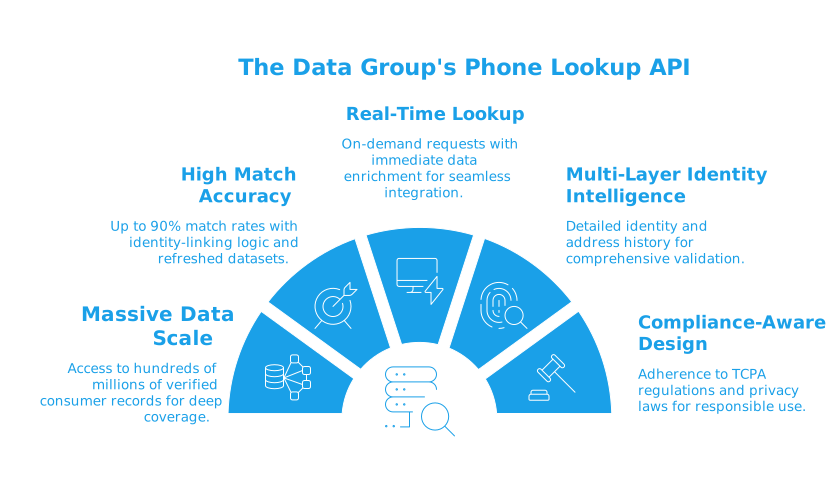
There are plenty of basic phone lookup tools on the market, but most of them only give you surface-level data or rely on stale databases. If you want to integrate phone intelligence directly into your business workflows, you need something more accurate and built for business scale.
Here’s exactly how The Data Group’s Phone Lookup API sets itself apart from the crowd:
- Massive, verified data scale. You can’t find what isn’t there. The Data Group taps into a network of hundreds of millions of verified consumer records. Instead of relying on limited public data, this massive scale of data ensures deep coverage and highly reliable matches across both retail customers and nonprofit donor bases.
- High match accuracy with strong data signals. A tool is only useful if the data is correct. Thanks to identity-linking logic and datasets that are continuously refreshed, the system delivers match rates of up to 90% when your input data is clean and complete.
- Real-time lookup + enrichment capability. Many legacy data tools force you to upload lists and wait for a batch export. This API is built from the ground up for real-time, on-demand requests. The second a user interacts with your system, the API checks and enriches that record.
- Multi-layer identity intelligence. It goes way beyond just handing you a name. The API digs beneath the surface to pull back associated identity and address history details whenever they’re available. This multi-layer intelligence gives you a complete validation footprint, making it simple to spot fraudulent accounts or confirm a high-value customer’s identity.
- Compliance-aware design for business use. The Data Group builds its systems with responsible-use guidance in mind, taking TCPA regulations, consumer privacy laws, and strict consent standards into account. This makes it much safer for your team to integrate the API directly into your marketing and outreach workflows without creating compliance headaches.
Your Next Best Customer Is Already In Your Database; Find Them With Us
You’ve probably already spent a small fortune acquiring a list of names, emails, and phone numbers. But if that list is full of typos or unverified contacts, it’s of no use. You don’t always need to go out and find entirely new audiences; you just need to resurface the value of the people who have already shown interest in your brand.
Whether you’re an e-commerce brand trying to slash checkout fraud or a nonprofit looking to maximize your donor outreach, clean phone data completely changes the game.
Don’t let bad data drain your marketing budget and waste your team’s time. Partner with a team that has real-time capabilities to fix your database at the source. Contact The Data Group today to integrate the Caller API and reveal your database’s hidden potential.
FAQs
How accurate is a phone lookup API?
Accuracy really comes down to the quality of the data behind it. With The Data Group, you’re working with a continuously updated database of hundreds of millions of verified records, which helps improve match reliability. In many cases, when there’s a strong data match, results can reach up to around 90% accuracy on clean input data.
What’s the difference between a caller API and a reverse phone append?
A caller API helps you identify or enrich information about a phone number or a caller. A reverse phone append, on the other hand, is more specific: you start with just a phone number, and it tries to “fill in the blanks” by returning details like a name or address when a match is found.
Is it legal to use a phone lookup to identify callers?
Yes, it’s legal to use phone lookup tools, as long as you’re using them for legitimate, compliant purposes. Businesses typically just need to make sure they’re following applicable privacy and consumer protection laws and using the data responsibly.