Nobody builds a messy email list on purpose. It just happens, oftentimes when someone signs up with a typo, a customer changes their job, or an old promo campaign pulls in a thousand addresses that were never really yours to begin with.
Before you know it, you’ve got a list that looks impressive on paper but performs terribly in practice. Global Security Magazine notes that while soft bounces, such as a full inbox or an overloaded server, are temporary, hard bounces, like nonexistent addresses, are “definitive problems” and may result in a sender being blocked by the provider.
That means even your good contacts stop seeing your emails. Bulk email verification is how you catch this problem before it catches you. Let’s walk through how it works.
Why Large Email Lists Go Bad

List decay is slow, and by the time you notice it in your metrics, the damage is already done. Here’s why even the most carefully built email lists go stale over time.
People Tend to Change Emails
Life moves fast. People switch jobs and ditch old providers. Others just abandon an inbox that got too spammy. According to HubSpot, the average email list decays by about 22% every year (just from natural churn alone)
If you’ve had the same list for three years without cleaning it, it’s high time you do the math. You may be holding onto a list that delivers more silence than value.
Typos
Never underestimate the power of a typo. When someone is signing up on a mobile device while distracted or in a hurry, gmail.com quickly becomes gmaill.con or gmial.com.
Many of these common typos are actually monitored as Spam Traps. Sending to them tells ISPs (like Google and Outlook) that you aren’t practicing good Data Hygiene, and they might start routing your real emails straight to the junk folder.
The Rise of Burner Culture
Most of us have done it. You want the 10% discount code or the free PDF, but you don’t want the marketing baggage. So, you use a disposable email service or a secondary spam-only account you check once every leap year. These addresses are valid for about ten minutes. When you try to mail them three months later, they’re hard bounces.
Intentional Sabotage
Sometimes, people just don’t want to be found. They’ll enter none@none.com or test@test.com just to bypass a required field.
While these look obvious to a human, a bulk sender will happily try to deliver to them. High volumes of non-existent recipients can quickly trigger spam-related red flags.
Engagement Dies (But the Address Stays)
It could be that someone signed up two years ago, opened your first three emails, but completely lost interest later. The address is still valid. But that cold, disengaged contact is dragging down your open rates and telling inbox algorithms that your emails aren’t worth showing.
Gmail and other providers use engagement signals to decide where your emails land (inbox, promotions tab, or spam). Dead weight contacts push you in the wrong direction.
How Bulk Email Verification Helps
Bulk email verification is a high-speed audit that analyzes large datasets to identify valid users.
Besides catching the obvious stuff like misspelled domains or addresses with symbols where they shouldnt be, it identifies role-based addresses like info@ or admin@ that rarely convert.
It also flags catch-all domains that accept everything but deliver nothing. What’s more, it surfaces duplicates that inflate your list size and make your numbers look better than they are.
The result is a healthier list that reflects your real audience. A Deloitte survey highlights that organizations using high-quality data are twice as likely to exceed their goals. Now, that’s a meaningful difference that shows up in your bottom line.
The Step-by-Step Cleaning Process
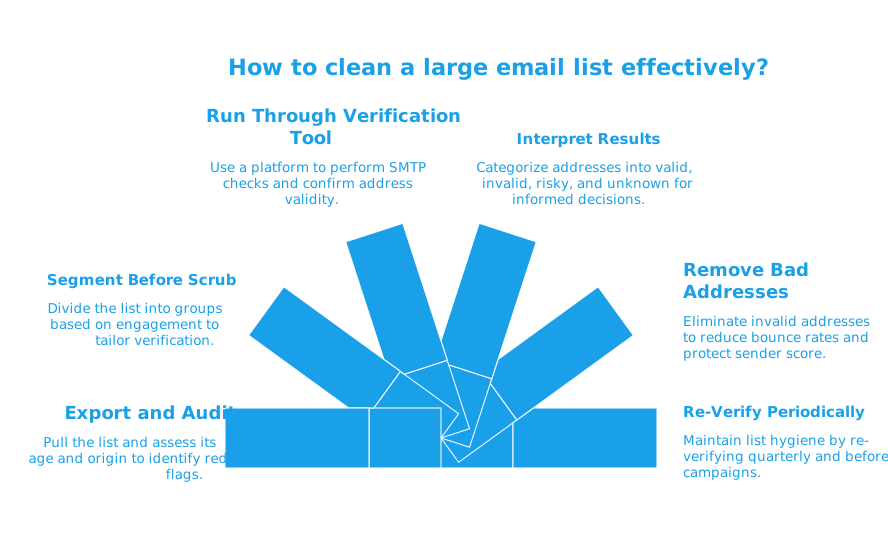
Cleaning a large email list sounds like a big job, and without the right process, it can be. However, when you’re working with a professional verification service, it’s a lot more straightforward. Here’s how it goes.
Export and Audit Your List
This is where you pull your list out and take an honest look at what you’re working with. How old is it? Where did these contacts come from (organic signups, a purchased list, or a bit of both?)
A good verification service would ideally want clean, properly formatted data to work with, so this is the moment to consolidate everything into one file and note any obvious red flags before the real work begins.
Segment Before You Scrub
Not all contacts deserve the same treatment going in. Your recently active engagers are different from contacts who haven’t opened an email in 18 months, and a smart verification process treats them that way.
Segmenting your list before verification gives you more nuanced results and puts you in a better position to make decisions about each group rather than painting everything with the same brush.
Run It Through a Verification Tool
This is where your segmented data is uploaded to a verification platform, which performs SMTP-level checks. In simple terms, the system communicates directly with the recipient’s mail server to confirm whether an address exists, without sending an actual email.
The response (valid or invalid) is returned instantly. This process is efficient and helps protect your domain reputation by preventing hard bounces.
Interpret the Results
A quality verification service returns your list segmented into clear categories: valid, invalid, risky, and unknown. Valid addresses are good to go. Invalid ones need to go. Risky and unknown addresses deserve a second look (some marketers suppress them, others run a re-engagement campaign first)
Either way, you’re making informed decisions instead of guessing.
Remove Bad Addresses
Here’s where the actual cleaning happens. Invalid addresses are removed or added to a suppression list so they never get mailed again. This step alone can dramatically reduce your bounce rate and protect your sender score.
Re-Verify Periodically
Remember that 22% annual decay rate? Your list starts going stale the moment you stop maintaining it! That’s why most professional services recommend re-verifying active lists every quarter and running a fresh verification before any major campaign send (regardless of when you last cleaned them).
How to Choose a Professional Email Validation Service
You want a service that doesn’t just delete but actually improves the health of your entire database. When you’re weighing your options, look for these non-negotiables:
- Comprehensive Data Hygiene Over Simple Verification: Don’t settle for a tool that only checks if an email exists. Look for a service that digs deeper into Data Hygiene, identifying non-human spam traps and habitual complainers.
- Real-Time & Batch Flexibility: Your business moves fast, so your validation should too. A top-tier service offers both bulk cleaning for your existing mess and Real-Time API integration to stop bad data at the front door. By validating emails the second they’re entered into your signup forms, you prevent typos and burner accounts from ever infecting your database in the first place.
- Compliance and Regulation Awareness: Choose a provider that prioritizes compliance with US regulations like CAN-SPAM, CCPA, and FCRA. You want a team that understands the nuances of privacy laws, ensuring your data practices, besides being effective, are totally above board.
- Seamless Enrichment Capabilities: The best services know that “cleaning” is only half the battle. Look for a provider that can enrich your data after cleaning it — appending missing details like phone numbers or demographic data.
Clean Your List Today With the Data Group’s Email Verification Services
A large email list isn’t an asset just because it’s large. It’s only an asset if it’s clean. Unverified lists drain your budget and quietly chip away at the campaign performance you’re working so hard to build. Thankfully, most of that damage is completely preventable.
If you’ve been sitting on a list that hasn’t been touched in a while, or if you’re gearing up for a big campaign and want to make sure it performs, this is your sign to clean it before you send it.
That’s exactly where The Data Group comes in. With a 99.5% deliverability guarantee, enterprise-grade bulk verification starting at just $0.002 per record, and a free test so you can see the accuracy before you spend a dime — there’s really no reason to send another campaign on a dirty list.
Try your free validation test today and get your list campaign-ready fast!
FAQs
How often should I verify my email list?
Ideally, you must verify your list at least every quarter. If you’re about to run a major campaign, verify before you hit send, no matter when you last cleaned it. The Data Group’s database is updated daily, which means when you run a verification, you’re checking against fresh, current data.
Will bulk email verification delete contacts I still want to reach?
Nope, and this is a common misconception worth clearing up. Verification doesn’t touch your database. It flags each address as deliverable, invalid, catch-all, or risky, and you decide what happens next.
What’s the difference between email verification and email append?
Verification checks whether the addresses you already have are valid and safe to send to. Email append does the opposite. It takes your existing customer records and fills in missing email addresses. Verification means cleaning what you have, and appending implies completing what’s missing. You might actually need both.
Can I verify a list of 100,000+ emails at once?
Absolutely. That’s exactly what bulk verification is built for. The Data Group handles large-scale enterprise lists with ease, processing records at speed and returning detailed deliverability scores for every single address.